Level Design in Planet Coaster 2
I applied a full design process to one of my favourite games in order to practice my skills and realise my creative visions!
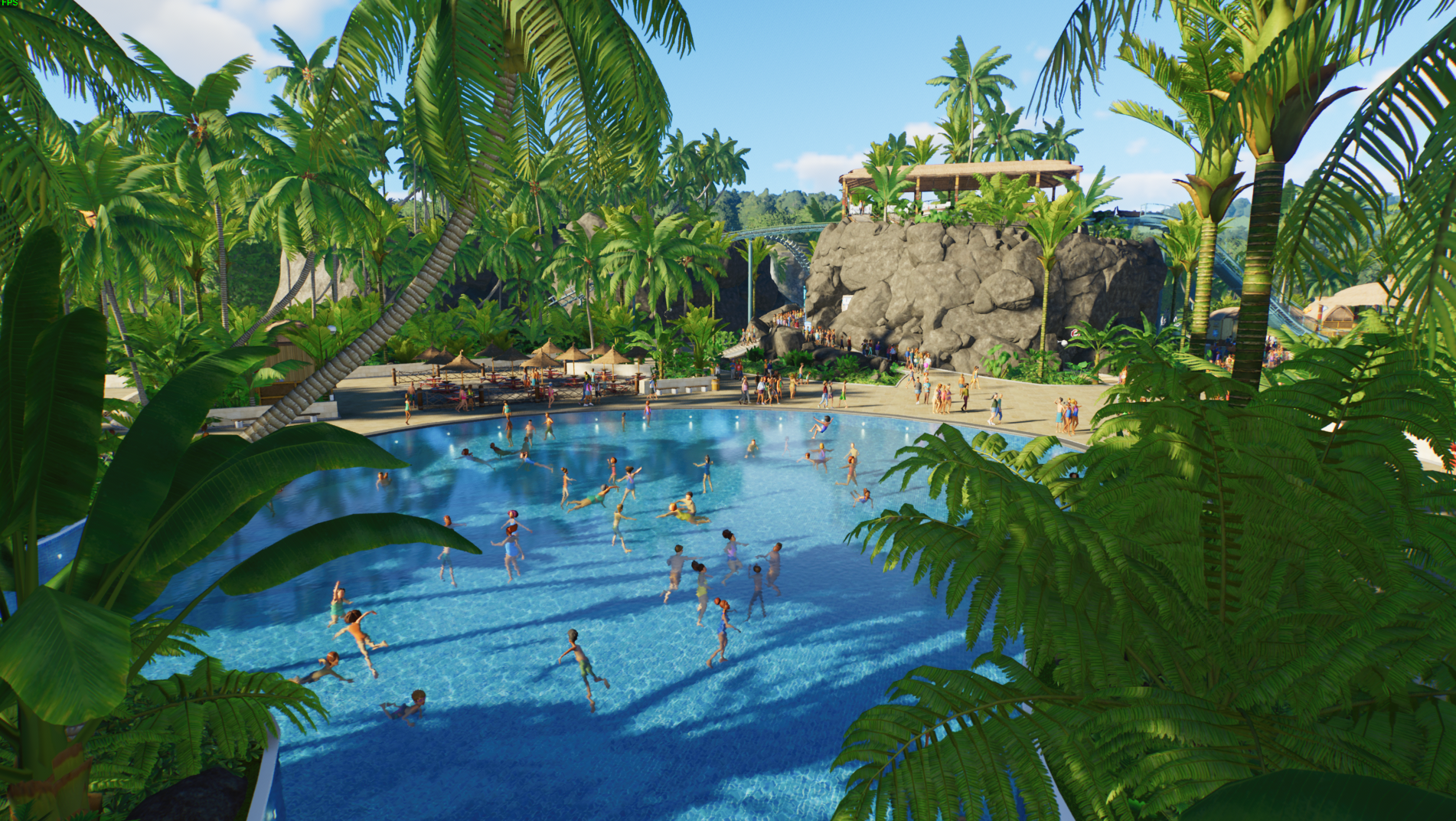
Planet Coaster 2 is one of my facourite games of all time, taking over from my love of the original game. I had built many theme parks in the first Planet Coaster prior to the sequel's release, and after some exploration with how the new entry takes everything further, I wanted to challenge myself.
Anyone can build a theme park in these games, but in order to design an authentic, effective and successful theme park in Planet Coaster 2, I had to think critically about pathways, ride placement, immersion and staff management. I can't just go in and "build on the fly", as that will (and has) led to messy, poorly optimized parks that don't generate revenue and look ugly.
So I started with a sketch. I took a screenshot of a birds-eye view of the landscape, grabbed my tablet, and made digital sketches of area layouts and building designs. I thought carefully about how people move through spaces, how to balance theming with functionality, and how to cleverly incorporate the staff facilities while maintaining immersion.
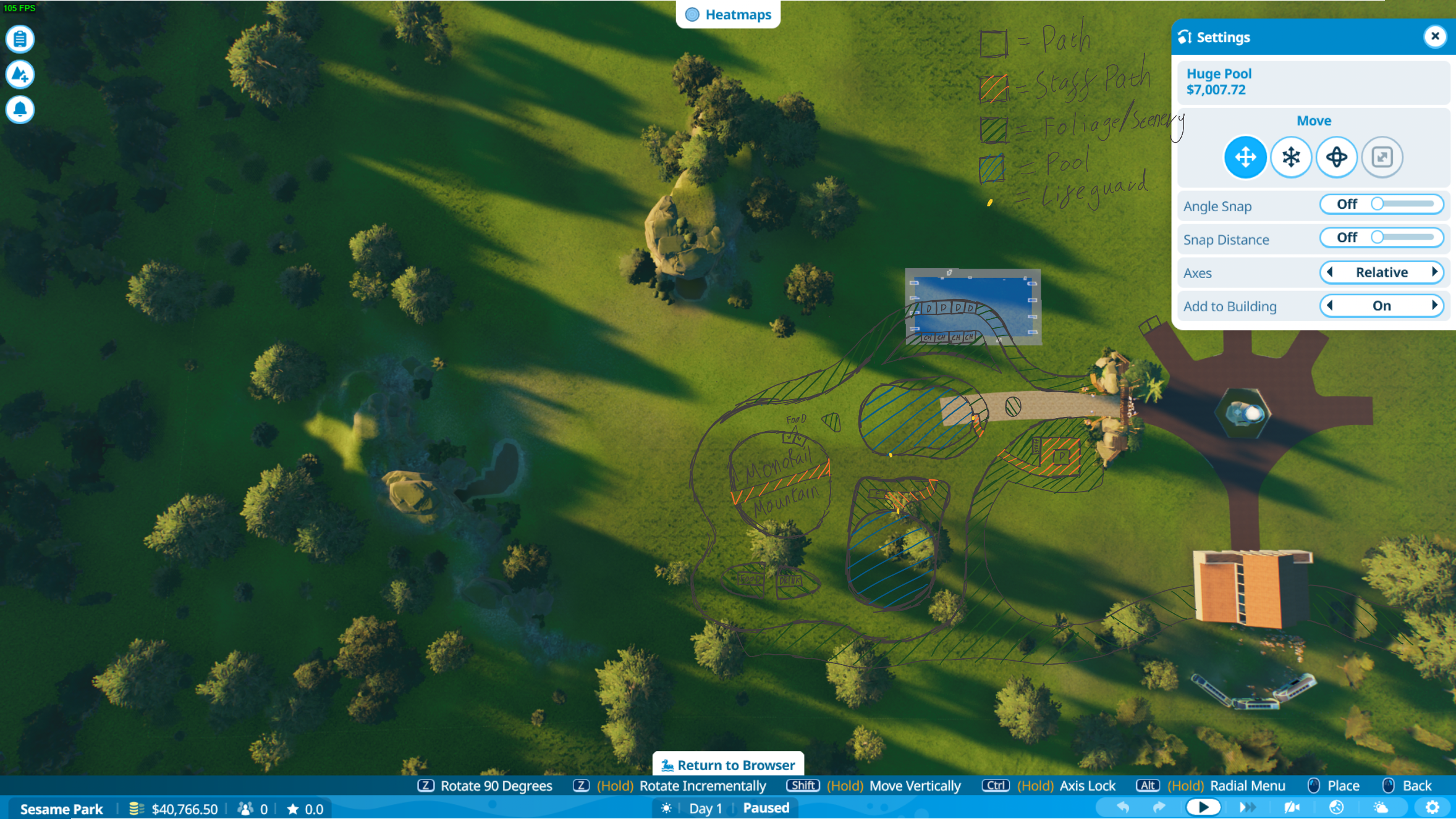
Top down view of landscape with level sketch overlay
Once I was happy with the concept, I moved back into the game, and started with building the pathways to act as a correctly scaled block-out of the area. With that in place, I added the rides; Adjusting designs as I went based on the in-game metrics to fine tune the results. Next I did the buildings and facilities, then finally the scenery and foliage.
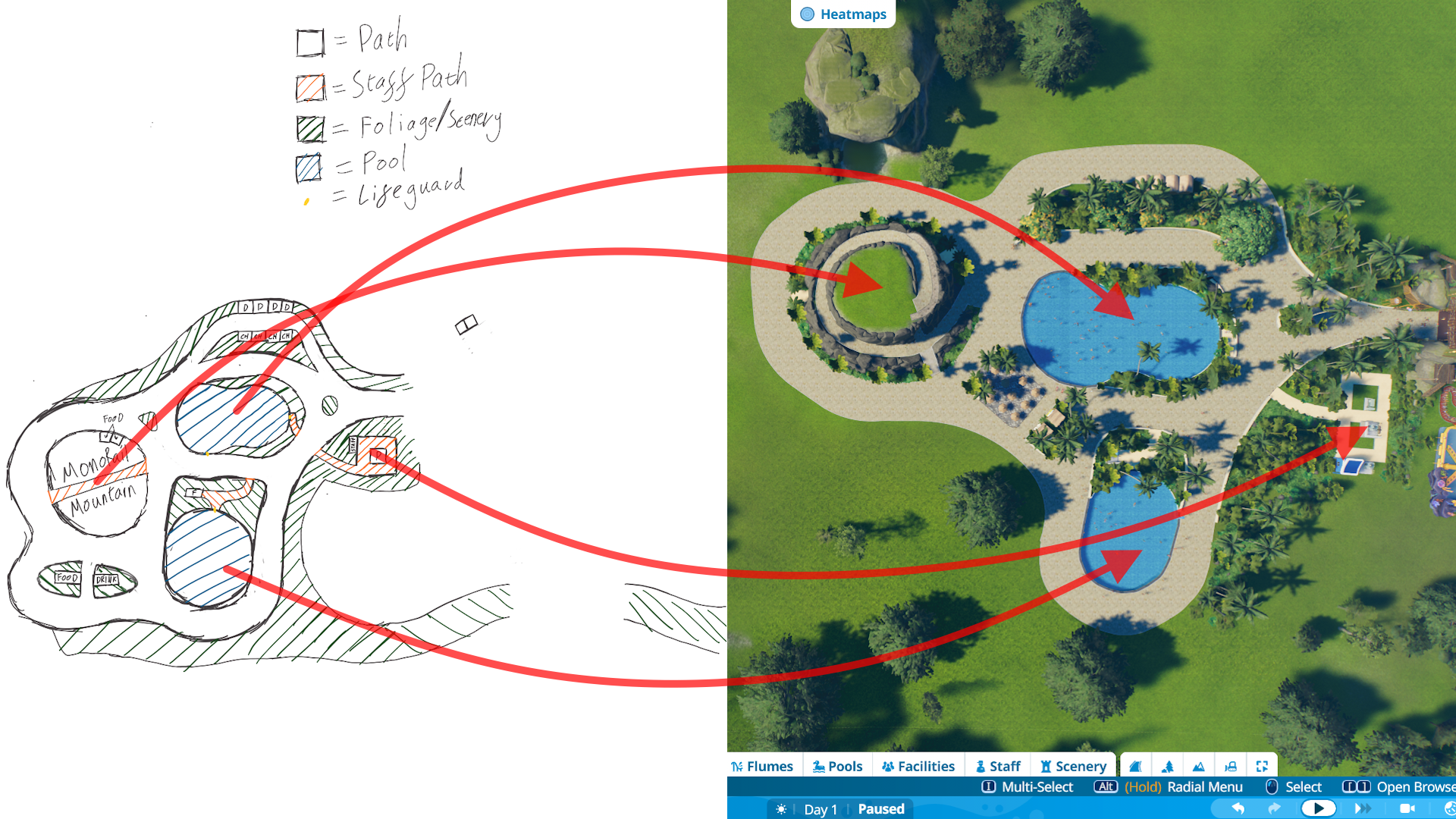
Comparison of sketch against in-game realisation
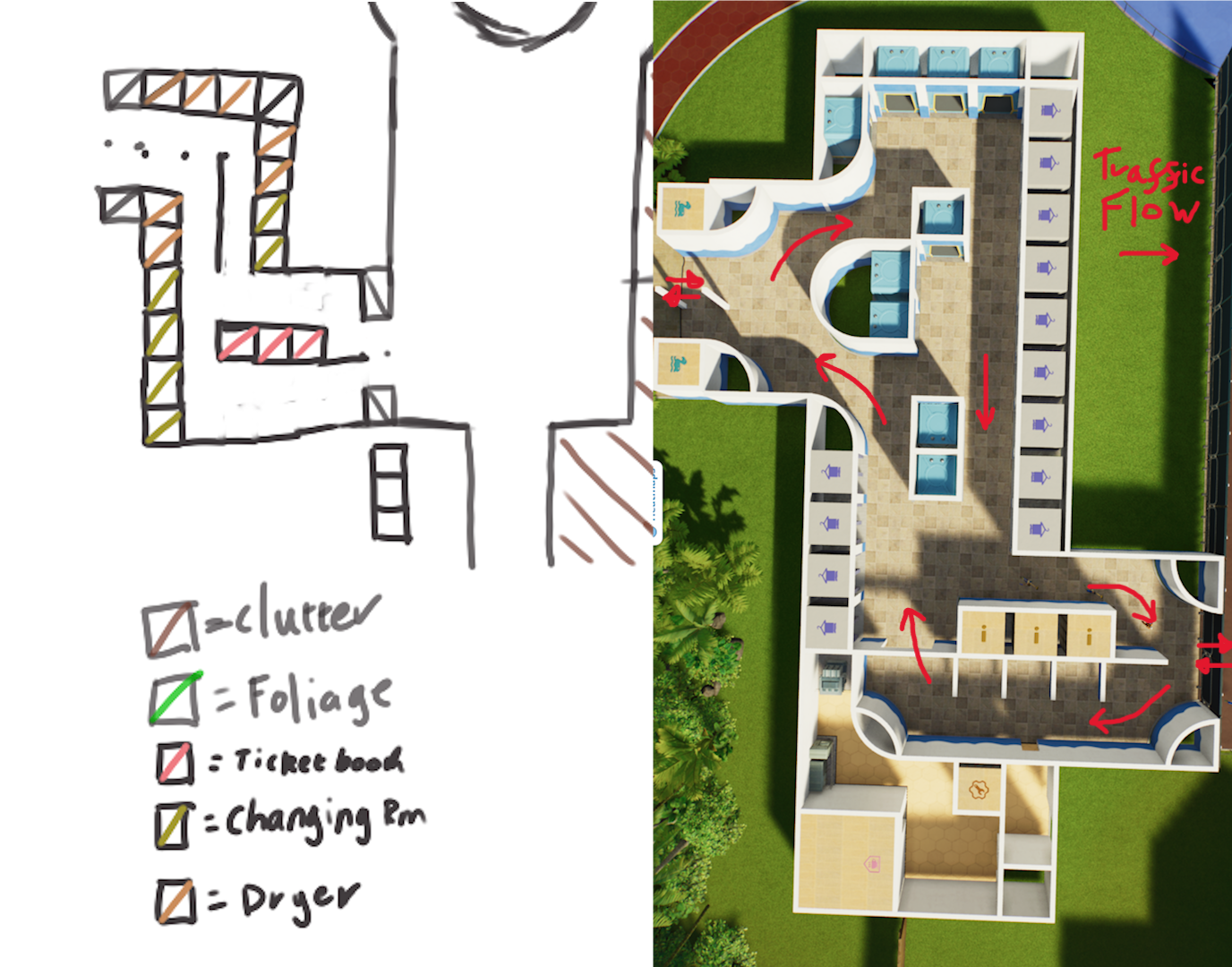
Changing room facilities designed for optimum traffic flow and hidden staff zone
All of this resulted in an efficient, pofitable and good-looking theme park that looked genuinely believable. Guests move around the space effectively and always in the direction of an attraction. Behind-the-scene facilities are well placed and well hidden, allowing staff to do their jobs without breaking the immersion.
I even made a logo for the park: 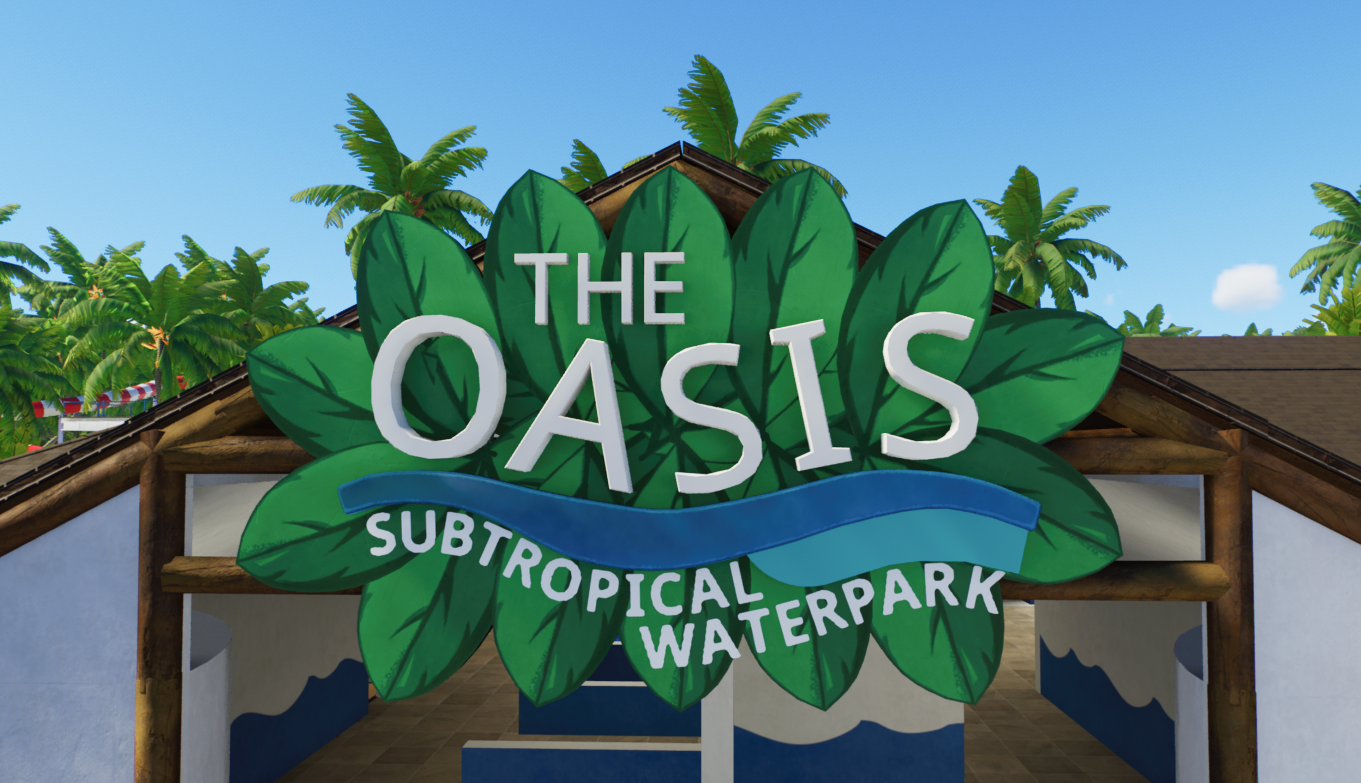
In-game fictional logo
And with everything in place, here are some final images of the park:
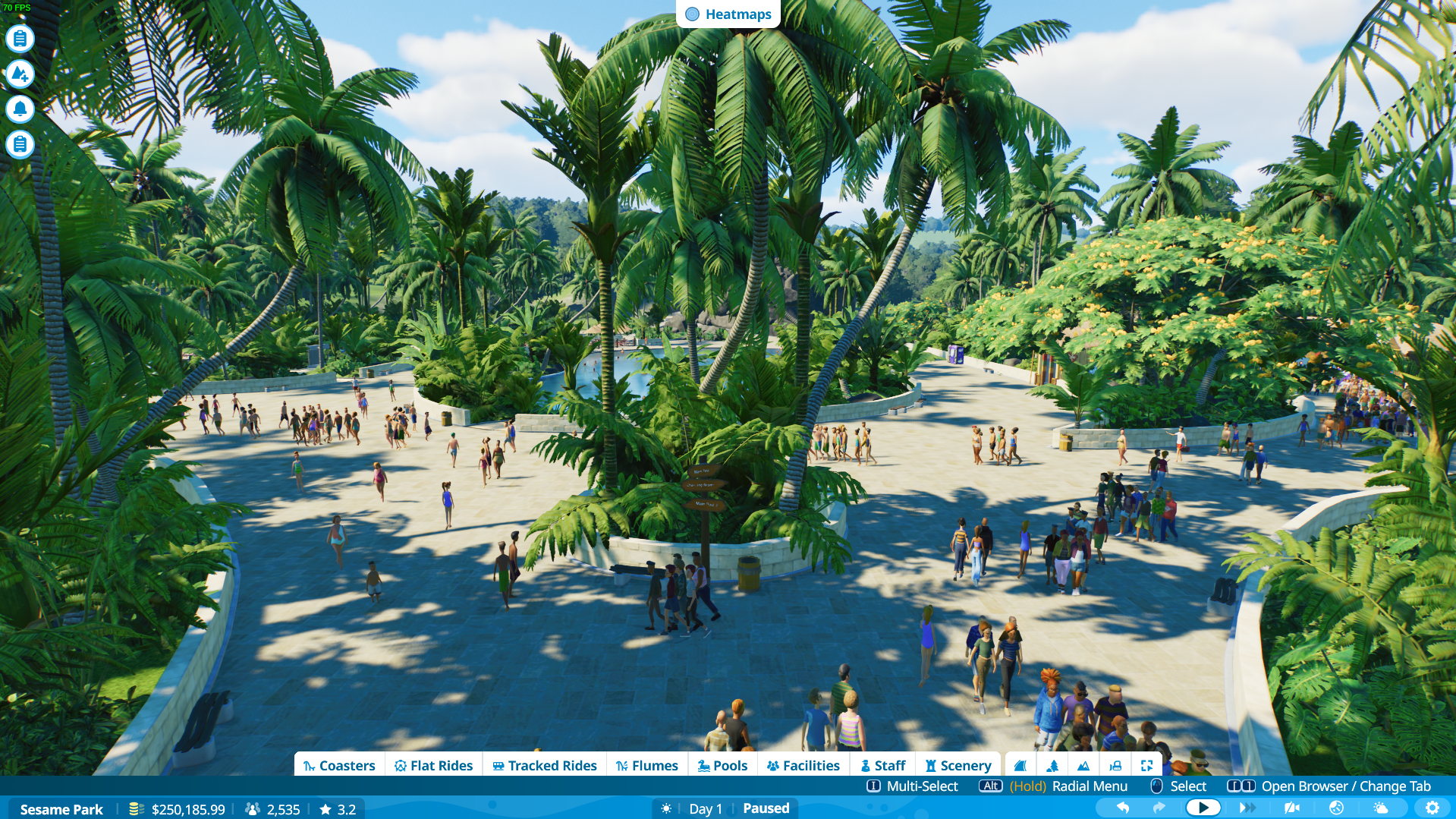
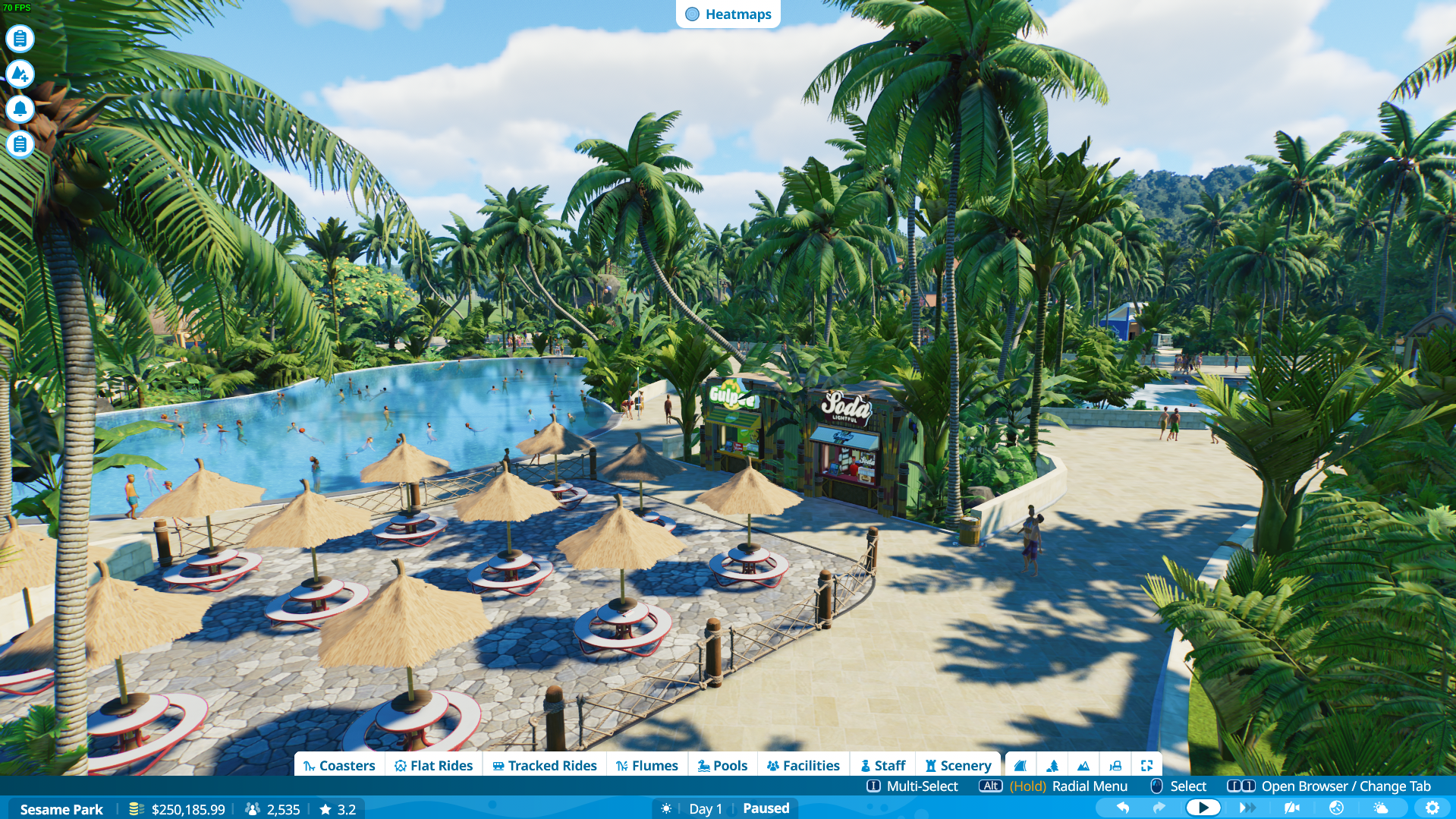

A theme park completed through level design
This process had been a lot of fun! It also showed me how ideas evolve through development, and how planning, iteration, and flexibility all shape the final outcome.